Smart Display ODM: How to Turn an Application Brief into a Device
A smart display ODM project begins with the application: what the device needs to show, how users will interact with it, and where it will be installed. These requirements guide the choice of display, computing platform, connectivity, power supply, and housing.
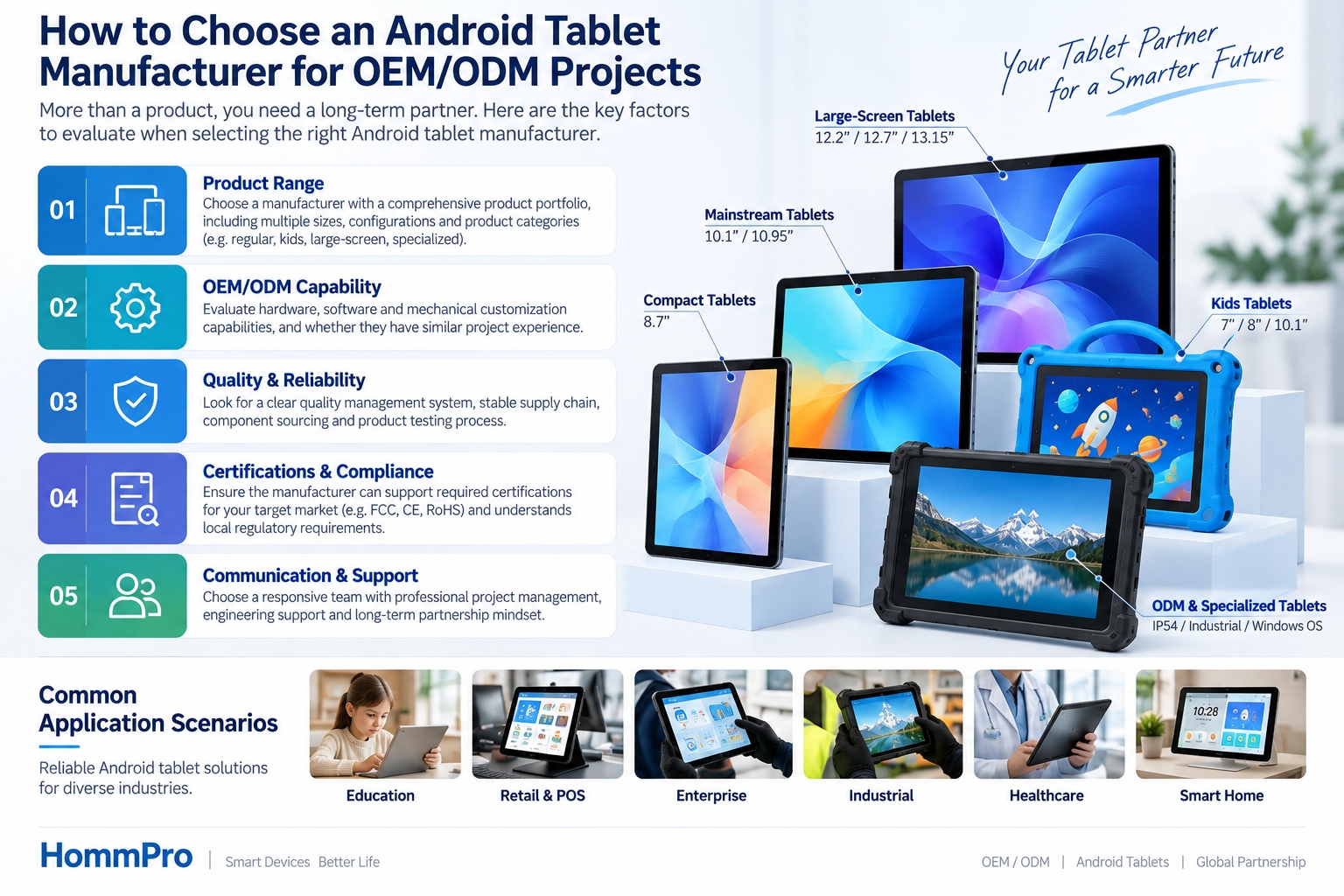
For brands and solution providers working with HommPro, a clear application brief helps establish which existing platform may be suitable and which elements need customization.
Describe the Daily Workflow
The first step is to explain how the device will work throughout the day. A home calendar display, digital photo frame, and commercial touchscreen may look similar, but their operating hours, software, installation, and interaction requirements can differ.
Describe the content shown on screen, the actions users will take, and how the device receives updates. Reference photos, application screenshots, and installation examples can make the brief easier to assess.
Review Software and Hardware Together
The required software should be considered before the hardware platform is selected. Operating system compatibility, application behavior, connectivity, storage, and peripheral requirements all affect whether a proposed device can support the intended workflow.
Share the application requirements and identify any devices that must connect to the display. If a feature is essential, include it in the specification and sample acceptance criteria.
Define Installation, Power, and Connectivity
Installation requirements influence the physical product design. Buyers should clarify whether the device will sit on a desk, mount on a wall, or attach to another structure, as well as how power and cables will reach it.
| Project Area | Information to Provide |
|---|---|
| Application | Main workflow, users, displayed content, and interaction |
| Display | Screen size, orientation, resolution, and touch requirements |
| Software | Operating system, application, startup behavior, and updates |
| Connectivity | Network access, interfaces, and connected peripherals |
| Power | Power source, charging needs, and expected operating hours |
| Installation | Desktop, wall-mounted, or other mounting arrangement |
| Customization | Housing, logo, packaging, and required accessories |
A brief should distinguish essential requirements from preferred options so that design choices can be evaluated against the project’s priorities.
Agree on Sample Acceptance Criteria
A sample should demonstrate the intended application, rather than only confirm that the screen turns on. Agree on the operating conditions, software tasks, connected accessories, and functions that must be tested.
Contact HommPro with your application brief, reference images, and target launch schedule to discuss a suitable starting platform and customization scope.
Frequently Asked Questions
What is needed to start a smart display ODM discussion?
Provide the application, software requirements, installation method, connectivity, power needs, and target specifications.
Can an existing platform be customized?
An existing platform may be a starting point. Suitability depends on the application and the required hardware, software, and housing changes.
When should a project quotation be prepared?
A meaningful quotation requires a defined configuration and customization scope. Sample and development requirements should also be clarified.
Related Article